
Rebuilding damaged masonry
Fackrell Masonry and Construction rebuilds brick, block and stone that's been hit or knocked down, from storefronts and entry walls to fence posts, anywhere in Southern Idaho. We repair the framing and sheathing behind the masonry too, so one contractor handles the whole thing.
I see a lot of this, and it's far more common than people expect. Mistaking the gas pedal for the brake is practically a seasonal event around here. Cars into entry walls and storefronts. Forklift drivers who were reading a text message and put the forks clean through a block wall and out the other side. Farm equipment and trailers that weren't hitched the way they should have been, taking fence posts down a row at a time. Snow and wind do their share too, quietly, on a longer schedule.
The work itself isn't complicated. It's particular. Everything damaged comes out, and that's always a little more than the dent on the outside suggested. The new brick or block goes in on the same coursing, so the joints line up with what's already there instead of running past it. Paint, if the wall was painted. Done right, nobody can find the repair afterward, and that's the whole reason you're paying for it.
It gets bigger when the vehicle didn't stop at the masonry. Damage that carries through the sheathing into the framing and the interior is routine on a storefront hit at speed. Fackrell Masonry and Construction has many years of general construction behind it as well as masonry, which is why this kind of job doesn't need two contractors and two schedules to get finished.
What this covers
- Every damaged unit removed, including the part of the damage that doesn't show from outside. Cracked block doesn't get patched, it gets taken out
- The new masonry laid on the existing coursing so the joints line up with the wall around them instead of telegraphing a patch
- Framing, sheathing and interior repair where the vehicle carried past the masonry into the building
- Brick and block fence posts rebuilt. New rebar set, cores grouted, caps re-set true
- Brick mailbox pillars rebuilt after a vehicle has left the road, and new ones built where you're starting over instead of repairing. They sit right at the edge of the pavement, which is why they come down as often as they do
- Entry walls, storefront wainscot and pilasters rebuilt, with the broken material hauled off before anything goes back
- Older brick and stone that isn't manufactured anymore matched as closely as size, shape and the original mason's pattern allow. About 75% is honest on the mortar, and anybody promising an exact match on a weathered wall hasn't done much of this
- The repair painted back into the wall where the wall was painted
- Photographs and written documentation of the damage and the repair, which is what an insurer or a property manager is going to ask for
- Whatever caused the damage dealt with along with the damage itself, whether that's a leaking rain gutter above eroded stone or a missing curb or bollard where vehicles keep arriving
How to tell you need this
- A vehicle backed into the wall and there's brick or block lying on the ground
- From inside the building you can see cracked block shoved into the room
- Fence posts knocked out of line, with the caps sitting crooked and the iron rails bent
- The hole goes deeper than the masonry and there's framing or sheathing visible behind it
- Cracks radiating out from an impact point, well past the hole itself, which means the damage is wider than it looks
- Stone or brick coming off a corner where a rain gutter has been running down the wall
Questions people ask
Someone drove into our building in Boise. Can you repair it?
Yes, and it's more common than you'd think. Fackrell Masonry and Construction has rebuilt a great many walls hit by cars, forklifts and farm equipment. The service area is all of Southern Idaho, between the Oregon and Wyoming borders, as far north as McCall, Stanley, New Meadows and Salmon. Start with a quote by clicking here.
How fast can you get a hole in the wall closed up?
Securing it and rebuilding it run on two different clocks, and it helps to keep them separate in your head.
Securing comes first and it happens quickly. Loose and dangerous material comes down, the opening gets closed against weather and entry, and the area gets made safe. For a business that's often the difference between opening tomorrow and not.
The rebuild runs on materials and on the claim. Block is generally quick, since standard sizes are on the shelf. Brick depends on whether yours is still made, and matching an older brick can mean sourcing it. And where insurance is involved, nobody's laying finished masonry until the adjuster has seen it and the scope is agreed, which is a wait that has nothing to do with the crew.
So call early even if none of the decisions are made yet. Getting it secured doesn't commit you to anything, and the photographs taken in the first hour are worth more than any taken later.
A car went into my house. Is that the same job as a storefront?
Same work, smaller, and usually a good deal more personal. A car into the front of a house takes out brick or stone, and at any speed it carries into the sheathing and framing behind it the same way a commercial front does.
What's different is that somebody lives there. So the first job is making it weather-tight and secure, and that happens well before any finished masonry goes back. Nobody should be waiting on a brick order with a tarp over the living room.
The other difference is matching. A house is usually one run of one brick, so a repair in the middle of an elevation has to disappear or it'll bother you every time you pull into the drive. Where the original brick isn't manufactured anymore, the match gets built out of size, shape and the original mason's pattern, and that gets closer than people expect.
If there's a claim, say so before anything is touched. What gets photographed before demolition is what the adjuster has to work from.
Will insurance cover this, and can you work with the adjuster?
Impact damage from a vehicle is commonly covered, though that's between you and your carrier and I won't pretend to speak for them. What I can do is document it properly. Photographs of the damage before anything is touched, a written description of what failed and why, and an itemized scope so an adjuster is looking at line items instead of one lump number.
Tell us there's a claim involved at the start instead of at the end. It changes what has to be photographed before demolition begins, and once the wall is down that evidence is gone for good.
Will insurance pay to match the existing brick?
Sometimes, and it's worth raising early, because it's a common place for a claim to come up short.
The issue is that carriers pay to repair what was damaged. If your brick isn't made anymore, repairing the damaged section leaves you with a visible patch on an undamaged wall, and whether the policy does anything about that varies. Some do, some don't. That's between you and your carrier and I won't speak for them.
What I can do is give the adjuster something to work with. Photographs of the damage before anything is touched, a written description of what failed, the material identified by name where that's possible, and an itemized scope, so there are line items on the table instead of one lump number. A claim with detail behind it goes better than a claim without it, and that's the most honest thing I can tell you.
Where a perfect match isn't available at any price, the match gets built out of size, shape and pattern instead. On most walls that lands closer than people expect, and it beats replacing a whole elevation to chase an exact one.
Will anybody be able to tell where the repair is?
On block, usually not. The damaged block comes out, new block goes in on the same coursing, paint goes back on, and it disappears.
On brick and older stone it depends on what's still manufactured. Where the original material isn't made anymore, the match gets built out of size, shape and the original mason's pattern instead, which is a good deal closer than it sounds and a good deal cheaper than the alternative. Replacing an entire building front to chase a perfect match is a real option and it's rarely the right one.
Do you fix the framing behind the wall, or do I need a second contractor?
We fix it. Vehicle damage very often carries through the sheathing into the framing and the interior, and Fackrell Masonry and Construction does general construction as well as masonry. Framing, sheathing and the masonry all get handled by the same crew, on one schedule, under one warranty.
Can you rebuild brick fence posts and entry walls?
Yes, and they come down more often than anything else on this page. Damaged posts get taken down, new rebar goes in, the cores get grouted and the brick goes back up to match what was there before the caps are re-set.
Worth knowing: the post that got knocked out of plumb but didn't fall is often in worse shape than the one lying on the ground. The mortar bond has been broken all the way down, and nothing about it looks wrong from the road.
Somebody took out my brick mailbox. Can that be rebuilt?
Yes, and brick mailboxes come down about as often as anything else I rebuild. They sit right at the edge of the road, which is exactly where a car that has left the pavement arrives.
The rebuild works like any other pillar. Everything damaged comes out, and that's usually more than the outside suggested, because the impact travels down through the joints. New rebar goes in, the cores get grouted, the brick goes back on the original coursing, and the cap and the box get set back true.
Two things worth knowing. The pillar knocked crooked but still standing is often in worse shape than the one lying in the ditch, because the mortar bond has broken all the way down and nothing about it looks wrong from the road. And if there's a claim, photograph it before anybody clears the debris away.
New ones get built too, if you're starting from nothing rather than repairing.
Wind took our block wall down. Is that the same as a car hitting it?
The rebuild is, mostly. The reason it fell isn't, and that part matters more than it sounds.
A vehicle brings a force nothing was designed for, so a well-built wall losing to one is nobody's failure. Wind is different. Wind is a load a freestanding wall is supposed to be built to take, and when one comes down in a storm the storm usually just finished something that was already wrong. Rebar never put in, or put in and never grouted. A footing that wasn't deep enough. Cores left hollow. Or joints washed out until the wall stopped acting as one piece.
So on storm damage I look at what's still standing as much as at what came down. The rest of that run is the same wall, built by the same hands on the same day. Rebuilding one section and leaving four identical ones up is a short-term result.
Snow does a slower version of the same thing, and that one shows up as leaning and cracking over a few winters instead of all at once.
How do you repair a block wall that's been punched through?
Damaged block out, new block in on the existing coursing, then paint. Cracked block never gets patched. Mortar filled into a cracked unit hides the crack and carries none of the load, so it fails again on its own schedule.
Patching is quicker, so it comes in at a lower price, and on the day the work is finished you can't tell the two apart. The difference shows up a few winters later, when the wall has to be paid for all over again. The person paying won't be the one who patched it.
The removal always opens up a bit more than the outside damage suggested, which is normal and worth expecting instead of being surprised by.
Masonry rebuilding projects
Real jobs, my own photos, and what the problem actually turned out to be.
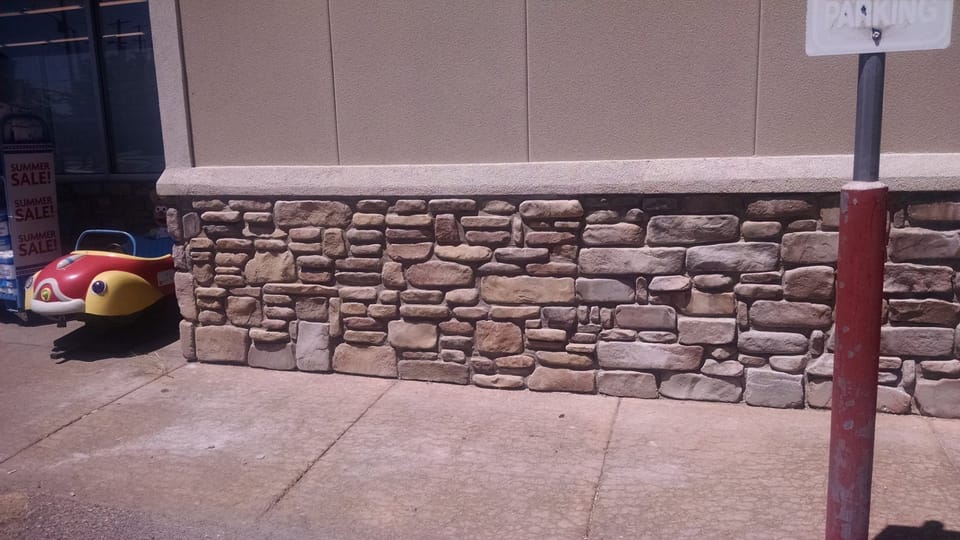
Family Dollar storefront, hit by a car
Storefront hit by a car: the damaged framing, sheathing and stone veneer rebuilt, plus a water-eroded corner repaired, at a Family Dollar store.
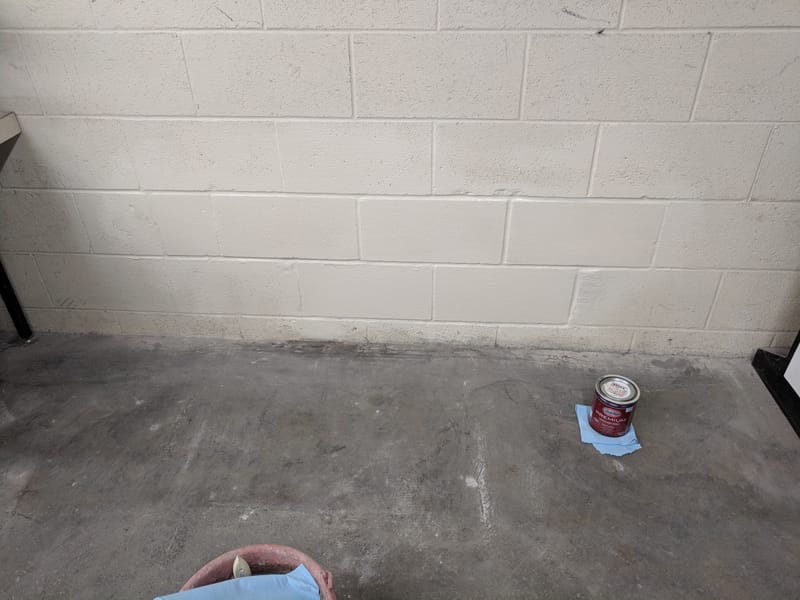
Forklift versus block wall
A concrete block wall punched through by a forklift: damaged block cut out, new block laid in, then painted to match.
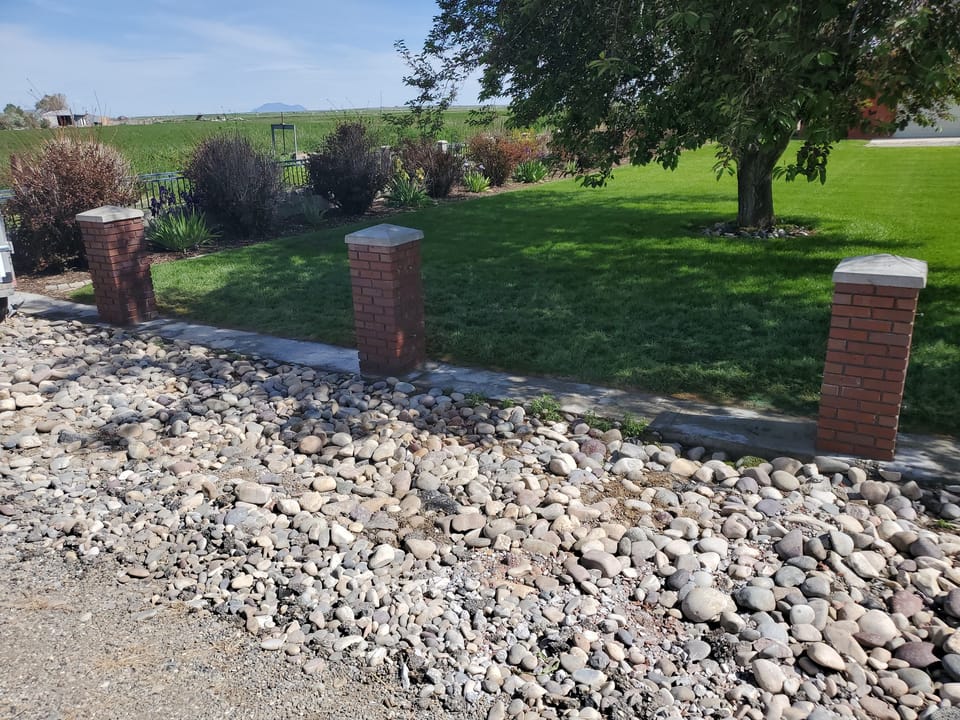
Tractor versus fence, Arco
Three brick fence posts in Arco, Idaho knocked apart by a vehicle, torn down to the footing and rebuilt with new caps.
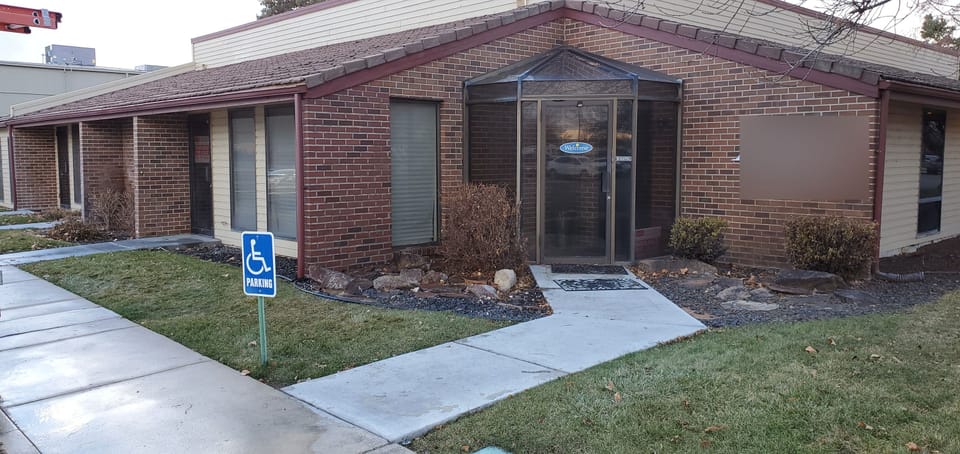
Car versus wall
A brick entry wall at an office building knocked down by a car, cleared away and rebuilt into the existing brickwork.
Often needed alongside
Commercial masonry
Storefronts, offices and public buildings, new and repaired.
Commercial masonry →New brick, stone and block
New brick and stone veneer, block walls, fences and outdoor living.
New brick, stone and block →Inspection and consultation
A written condition report on brick, stone or chimneys, for when what you need is the assessment and not a bid.
Inspection and consultation →