
Chimney Repair and Rebuilding
Fackrell Masonry and Construction repairs and rebuilds brick and stone chimneys across southern Idaho, from crumbling crowns and loose brick to full rebuilds above the roofline. Brad Fackrell is a third-generation mason, working from Nampa and Blackfoot.
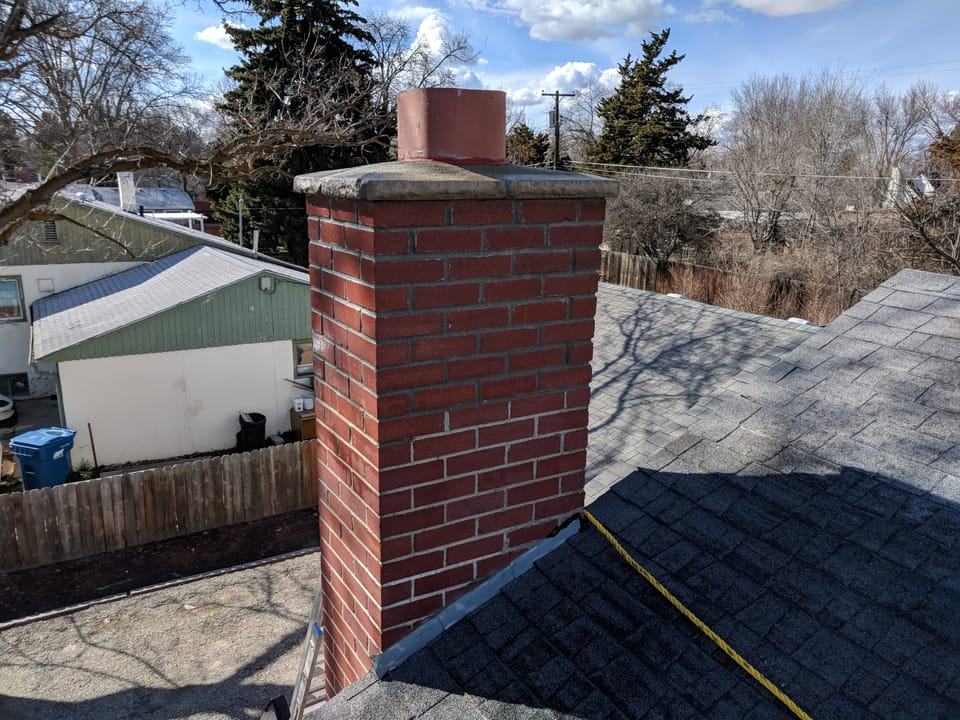
Almost every chimney I work on traces back to the same thing. The crown. A proper one would have bought most of these chimneys many more years, and most of them got a thin one instead. Once it cracks, water gets in at the top and runs down the face of the brick, and that's what takes the mortar joints and the brick with it.
A chimney is out of sight and out of mind until bricks start raining down from above. By the time somebody calls me the top is usually worse than it looked from the ground. I regularly find the top few courses lifting off with no effort at all, one wind storm away from coming down. Flue liners weaken over time too, and the top section is often past saving by the time the old crown is off it.
Sometimes the fix is resetting the loose brick, repointing the joints, repairing the liner and building a new crown with a drip edge on it. Sometimes the stack is far enough gone that the honest answer is to take it down to the roofline and build it back. Which one you're looking at gets decided after somebody has been up there, not from the driveway.
What this covers
- Crowns cast in reinforced concrete, sloped away from the flue and projecting past the brick with a drip groove underneath. My standard is a minimum of two inches at the thin edge, which is also what the Brick Industry Association calls for in Technical Notes 19B, Residential Chimneys. The drip edge throws water clear of the brick instead of letting it run down the face, and on most chimneys it's the cheapest way there is to add years to the brick below. It isn't the right answer on every chimney, and there's a question further down about the ones where it isn't
- Loose brick removed and reset, and mortar joints that have washed out repointed
- Mortar matched as closely as the materials allow, worked out from a cured sample set my dad and I have built up over the years. About 75% is honest. Nobody gets an exact match on a weathered chimney
- Top section flue liner repair, or replacement where a clay liner in the right size can be sourced. Pumice liners aren't made anymore, so on those the answer is a repair
- Metal chimney caps fitted on top of the flue liner, which keep rain out of the flue and stop birds and squirrels setting up inside the chimney. Worth not confusing with the masonry crown above, which people also call a cap and which is a different part of the job
- Full rebuilds above the roofline, taken down to the roof and built back in brick or stone
- Rebuilds detailed to suit the building, from stepped Colonial corbelling to engineered stone on a chase
- Chimney chases clad in stone or brick, including full-height work off scaffold on tall gable ends
- Repairs an insurance company wants done before it'll write or renew a policy, with photographs and a written description of what failed, which is what a carrier asks to see
- The roof around the chimney covered before demolition, so taking a stack down doesn't cost you shingles as well
- Working alongside your roofer where flashing or a cricket is part of the answer. Water showing up at a chimney is a roofing problem about as often as it's a masonry one, and sorting out which one before anybody starts costs you nothing and saves you paying for the wrong repair
How to tell you need this
- Joints worn back from the face of the brick. A quarter of an inch of recession is the trade's standard threshold for repointing, because past that the joint stops shedding water.
- On tooled joints, the hard outer surface worn away. Tooling compacts that skin, and the skin is what sheds water. Once it's gone, the softer mortar behind it erodes a lot faster. Raked joints don't have that surface, so on those it's simply a question of how deep the erosion runs.
- Daylight through the joints at the top of a chimney. That one's urgent. At that stage brick is ready to start coming off.
- A cracked, crumbling or broken-up top. Whatever is up there is what keeps water out of the chimney, and on most chimneys around here it's a thin wash feathered out to nothing at the edges, which is why it goes first. Once it goes, the mortar joints and the brick below it are next.
- Brick near the top you can move with your hand. Once the joints around it have washed out, there isn't much holding it in place.
- Brick or mortar crumbs on the roof and in the gutters. That material came off the top of the stack. I regularly find the top few courses lifting off with no effort at all, one wind storm away from ending up in the yard.
- A stucco or skim coat that's cracking and letting go. A coating over loose and damaged brick isn't a repair, it's a bandaid, and bandaids over structural damage come off. The brick underneath is usually worse than the coating suggests.
Questions people ask
Do you repair chimneys in Boise?
Yes. Fackrell Masonry and Construction covers all of Southern Idaho, between the Oregon and Wyoming borders. That reaches as far north as McCall, Stanley, New Meadows and Salmon. I work from Nampa in the Treasure Valley and Blackfoot in eastern Idaho, and the work carries a workmanship warranty you'll know the terms of before you sign anything. Start with a quote by clicking here.
Do I need a mason or a chimney sweep?
Two different trades, and mixing them up is one of the more expensive mistakes people make with a chimney.
A chimney sweep deals with what's inside. Creosote and soot out of the liner so the thing doesn't catch fire, and a look at whether it's safe to burn. That's their trade and it isn't mine.
I deal with the chimney itself. The brick, the mortar joints, the crown on top, the top section of liner. Whether it's standing up straight and whether it's shedding water.
The rough sort is this. Smoke, smell, or a safety check before burning season, call a sweep. Something you can see from the yard, loose brick, crumbs on the roof, a cracked top, a lean, call a mason.
Where it goes wrong is hiring a sweep to do the masonry. Plenty of them will take the work, and repointing and crown work are not what they do all day. I get called out to put it right often enough to say so plainly. You can usually spot it from the sidewalk too, because mortar ends up smeared across the brick faces, and once that has cured into the brick nothing will take it off.
Plenty of chimneys need both trades, and there's no conflict in that. Just don't hire one expecting the other's work.
One more thing, and it's the part most people skip. Be careful with "well, we have a mason." Ask who that mason actually is, what he's built, and how long he's been doing it. Then ask for the state registration number and go look it up yourself at the Idaho Division of Occupational and Professional Licenses. Idaho requires registration for construction work over a dollar threshold that almost any masonry job clears, and the registration names the trade. Masonry should be on it.
No registration on a job that size isn't a technicality, it's against the law, and I'd run. Registered under a handyman code tells you something too. A handyman registration is not a masonry qualification. Nobody sits an exam for it, and being a handyman doesn't stop somebody taking on your masonry repair. It just means you're the one carrying the risk.
So treat the number as the floor instead of the finish line. Check it, then still ask what he's built.
Does my chimney need a repair or a full rebuild?
It comes down to how much damage there is, and what a repair would cost against what a rebuild would cost. Mortar is the easy part. Joints wash out, joints get repointed, and on its own that rarely means a rebuild. Brick is what decides it. Once enough of the brick has gone, replacing it piece by piece costs more than taking the chimney down to the roofline and building it back. At that point the rebuild is the cheaper job as well as the better one. That call gets made after somebody has actually been up there and looked.
My chimney is leaning away from the house. Is that dangerous?
Treat it that way until somebody has looked at it. A stack that's moving is a stack that can come down, and it doesn't give much notice.
Two very different things cause it. One is the masonry. Joints have washed out far enough that the stack isn't acting as one piece anymore, and the top half goes where gravity sends it. That's my work.
The other is what's underneath. If the footing under the chimney has settled or heaved, the chimney is going along for the ride and the house isn't. I've been out to chimneys separating from a house where no amount of masonry would have solved it, because the masonry was never the problem. Rebuilding a stack on a footing that's still moving only resets the clock.
Here's how to read yours. Look at the gap where the chimney meets the wall of the house. If it's wider at the top than at the bottom and it's opening up over time, that's the second kind. Take a photo today with a tape measure in the shot, and take the same photo in a month.
Water is showing up around my chimney. Is that a masonry problem or a roofing one?
Could be either, and it's worth knowing which before you pay anybody.
Water at a chimney has three usual doors. The top, where a cracked or thin crown lets it straight down into the stack. The brick and the joints, where washed-out mortar lets it soak in from the side. And the flashing, which is the metal where the chimney meets the roof. The first two are mine. The third is roofing.
The stain on your ceiling won't tell you which one it is, because water runs sideways along framing before it shows up inside. Somebody has to get up there and look at all three.
Sorting that out before anybody starts is the difference between fixing it once and paying for it twice. I'd rather send you back to your roofer than sell you a repointing job that doesn't dry the ceiling.
There's white chalky powder on my chimney. What is that?
Efflorescence. Salt, carried out of the masonry by water moving through it and left on the face when the water evaporates.
The powder itself is harmless. What it's telling you isn't. Water is getting into that chimney and traveling through the brick, and on a chimney the usual way in is the top. A cracked crown, a thin wash that's let go, or joints washed out far enough to drink.
Don't count on it washing off, either. Some of it does and some of it never will. Try a small amount of water and a brush first, and small is deliberate, because water is the thing causing this in the first place and soaking the chimney to clean it makes the problem worse than the stain.
So don't treat it as a cleaning problem. Scrubbing it off and sealing over it puts a lid on water that's still arriving, and that's worse than leaving it alone. Find the way in, close it, and the bloom stops coming back on its own.
If it keeps returning after a rebuild or a repoint, something is still open up top.
Why do chimneys fall apart in the first place?
Usually the top, and usually because whatever is up there was built thin.
There are two ways to finish a chimney. A crown is cast concrete, reinforced, sloped away from the flue and projecting past the brick with a drip groove underneath, and the Brick Industry Association puts it at two inches minimum in Technical Notes 19B. On most chimneys that's the right answer. A wash is material troweled over the top instead, and there are chimneys where a wash is the right answer, usually where a crown would ruin what the original mason built.
The trouble is that almost nobody builds a wash properly. It gets feathered out to a knife edge at the brick, and a knife edge of anything cracks in the first hard freeze. Water gets in, runs down the face of the brick, and takes the joints with it. The material matters as much as the thickness. Plain mortar has very little strength in a thin section, so a wash made out of it cracks even where nobody feathered it.
That's where a cheap price comes from. The top of a chimney is the one part of your house you'll never climb up and look at, and a bad wash looks respectable from the ground for the first few winters.
What does chimney crown repair cost?
Not a number I can put on a page, and I'd be careful with anybody who gives you one over the phone.
What moves it is access and what's under the old crown. A single story with a walkable roof and sound brick underneath is one job. A steep two story needing scaffold or a lift is another, and getting up there can cost more than the masonry does. Then there's what the old crown was hiding. Where water has been getting in for years the top few courses are usually loose, and those get reset or rebuilt first. There's no point casting a good crown onto brick that's already letting go.
What I'll say plainly is that a crown is cheap next to what it protects. It's a day or so of work. A rebuild above the roofline is a different order of money altogether, and a bad crown is the most common reason people end up buying one.
Do you replace chimney flue liners?
Sometimes, and only the top section of each flue. When the crown comes off, the top section is the part that's taken the weather, and if it needs replacing I replace it. Clay liners I can usually source. The old pumice ones aren't made anymore, so on a pumice flue the answer is almost always a repair. The sections below the top are built into the stack, and reaching them means taking the chimney apart, which is a rebuild rather than a repair. I'll tell you that up front instead of after.
Do you install chimney caps?
Yes, and it's worth sorting out which cap you mean, because two different things go by that name and people end up talking past each other.
A chimney cap, in most people's usage, is the metal piece sitting on top of the flue liner. It keeps rain out of the flue, keeps birds and squirrels from setting up in there, and usually carries a spark arrestor. I install those.
The other thing called a cap is the masonry on top of the stack, which in the trade is a crown or a wash. That's the slab covering the brickwork itself, and it's the part that decides how long the chimney lasts. There's a question further up this page about why.
So both are mine. Tell me your cap is rusted through and I'll picture the metal one. Tell me your cap is cracked and crumbling and I'll picture the masonry. Send a photo and neither of us has to guess.
Does every chimney get the same crown?
No, and a mason who says otherwise hasn't looked at your chimney yet.
A cast crown, two inches minimum with a drip edge, is my standard, and on most chimneys it's plainly the right thing to build. Two situations change that.
The first is a historic building, where the chimney has to stay in its original configuration. What the original mason built is the specification, and a modern crown isn't part of it.
The second is a chimney whose top courses are corbelled, meaning the brick steps out course by course to form the finished top. That corbelling is the detail the chimney was designed around, and setting a slab with a drip edge on top of it takes that away and, in my opinion, makes the chimney look wrong.
So it's a judgment call, and making it is a good part of what you're paying a professional for. Where the brick can be protected without erasing the original mason's work, that's the way to go.
Can snow sliding off a metal roof knock a chimney down?
It can, and it does. Snow lets go off a metal roof all at once and there's nothing gentle about it. I've rebuilt several chimneys that lost the argument, including cabins where the top of the stack ended up out in the yard.
The pattern is nearly always the same. Metal roof, a chimney sitting downhill of a long run of it, and no cricket built above the stack to split the load and send it around. A cricket is a small ridged structure behind the chimney that does exactly that. Where one is missing, rebuilding the masonry without getting a cricket added is just scheduling the next rebuild. A cricket is roofing work instead of masonry, so it's a call to make with your roofer, and better made before the chimney goes back up than after.
Chimney repair projects
Real jobs, my own photos, and what the problem actually turned out to be.
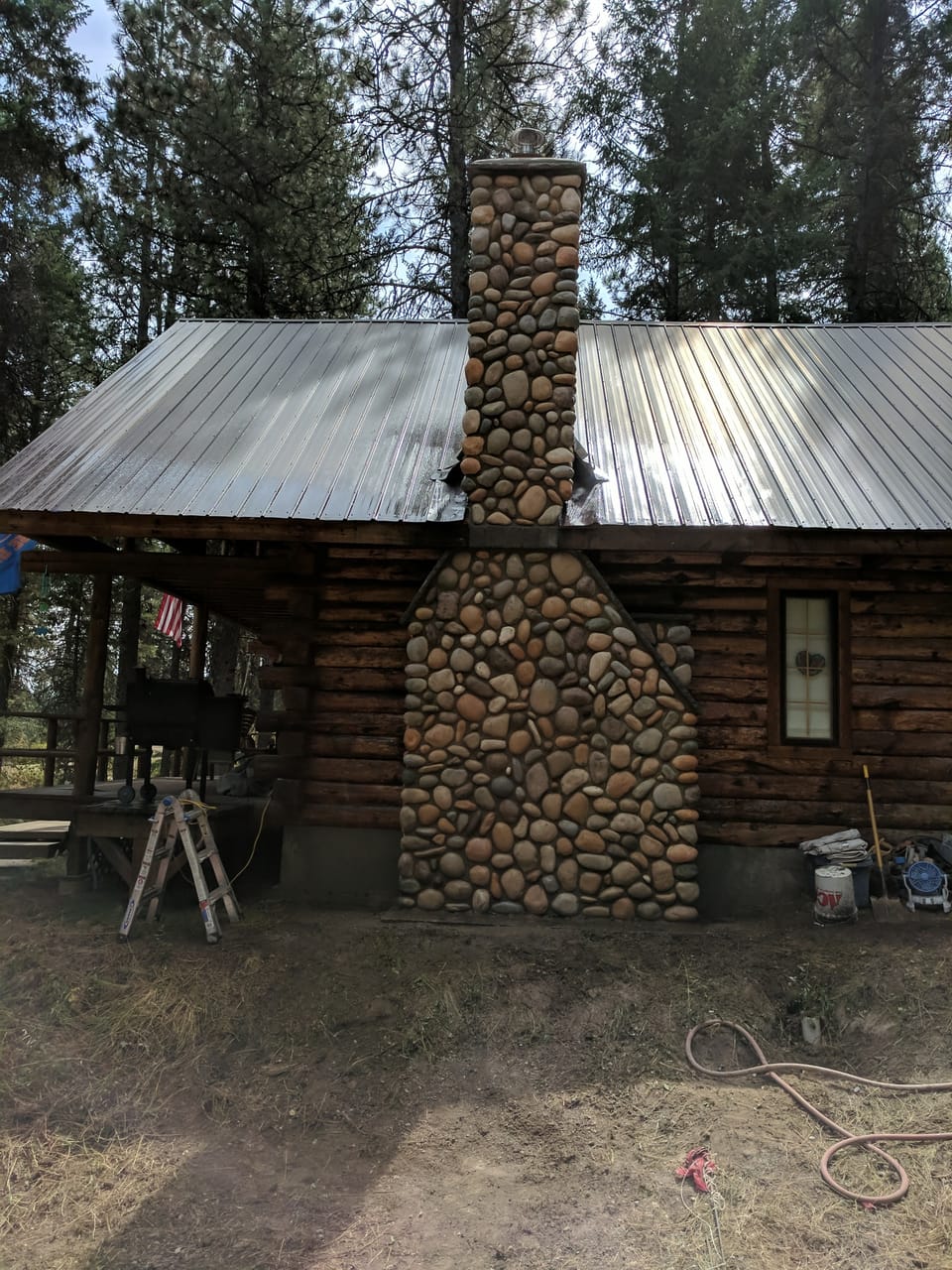
Chimney rebuild, toppled by snow
A log cabin chimney knocked down by snow sliding off a metal roof, rebuilt from the ground up and faced in manufactured river rock.
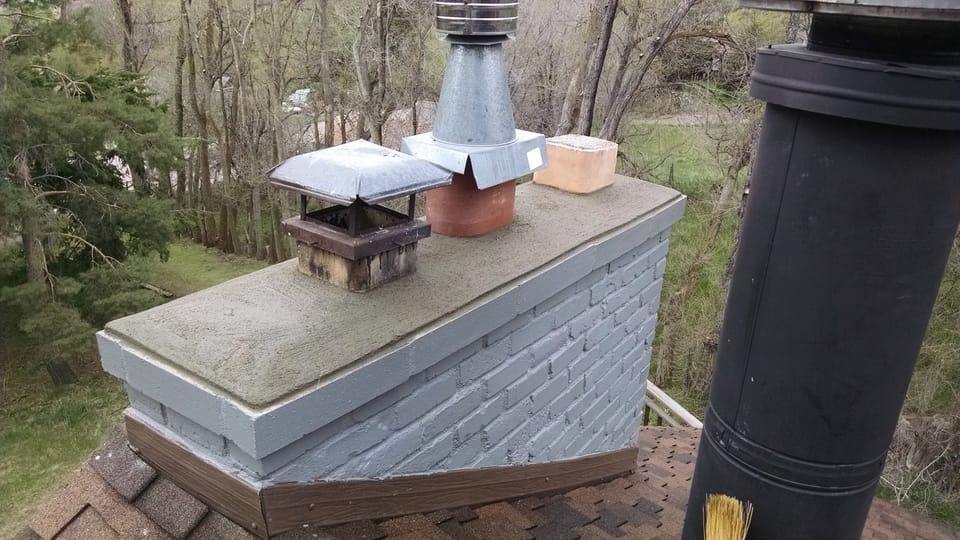
Chimney repair: a deteriorating crown
A worn chimney crown and eroded brick rebuilt, with a new top liner section and a drip edge to keep water off the brick.
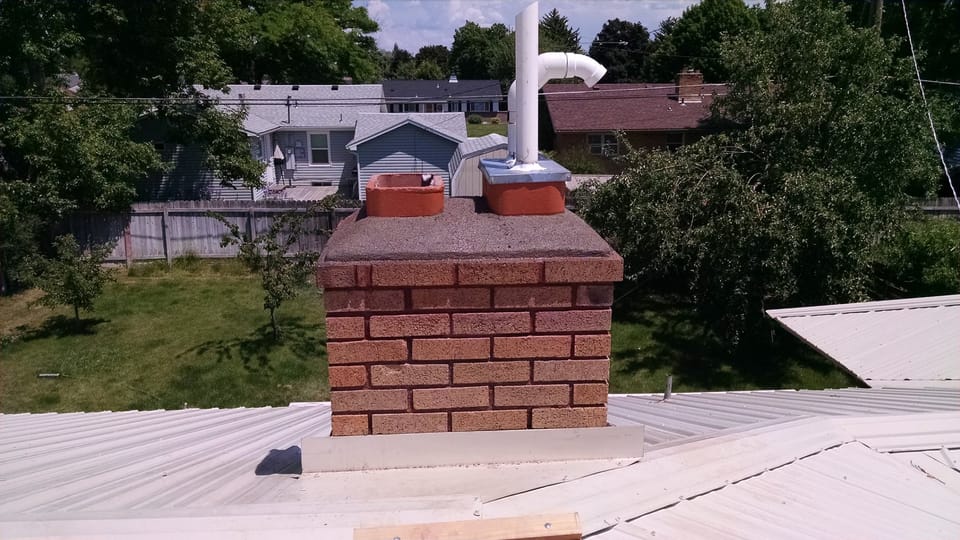
Chimney repair required by an insurer
A worn chimney the insurer required repaired: loose brick reset, joints repointed, top liner section repaired, new crown and drip edge.
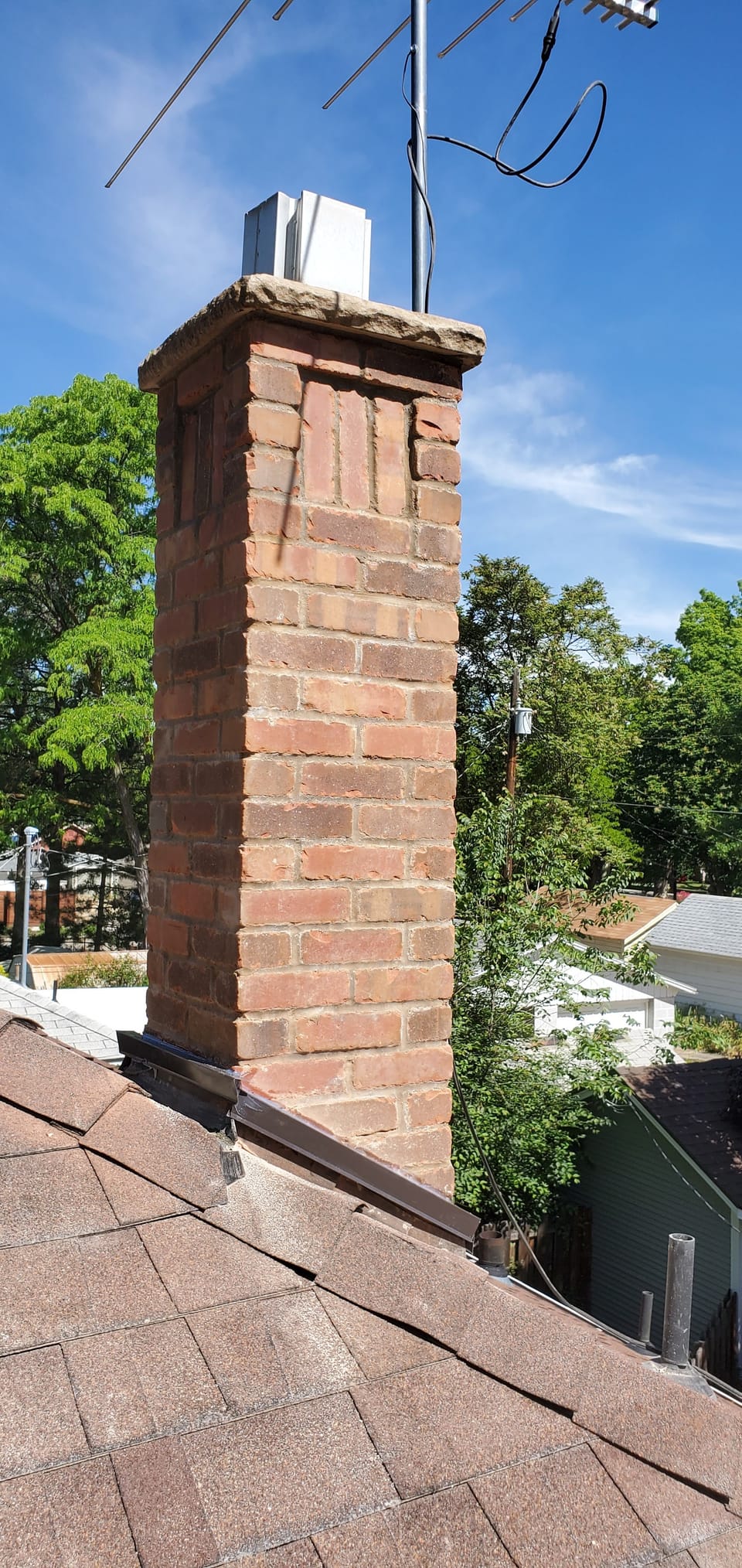
Chimney rebuild after a failed stucco "repair"
A brick chimney that had been stuccoed over instead of repaired, taken down to the roofline and rebuilt in new brick.
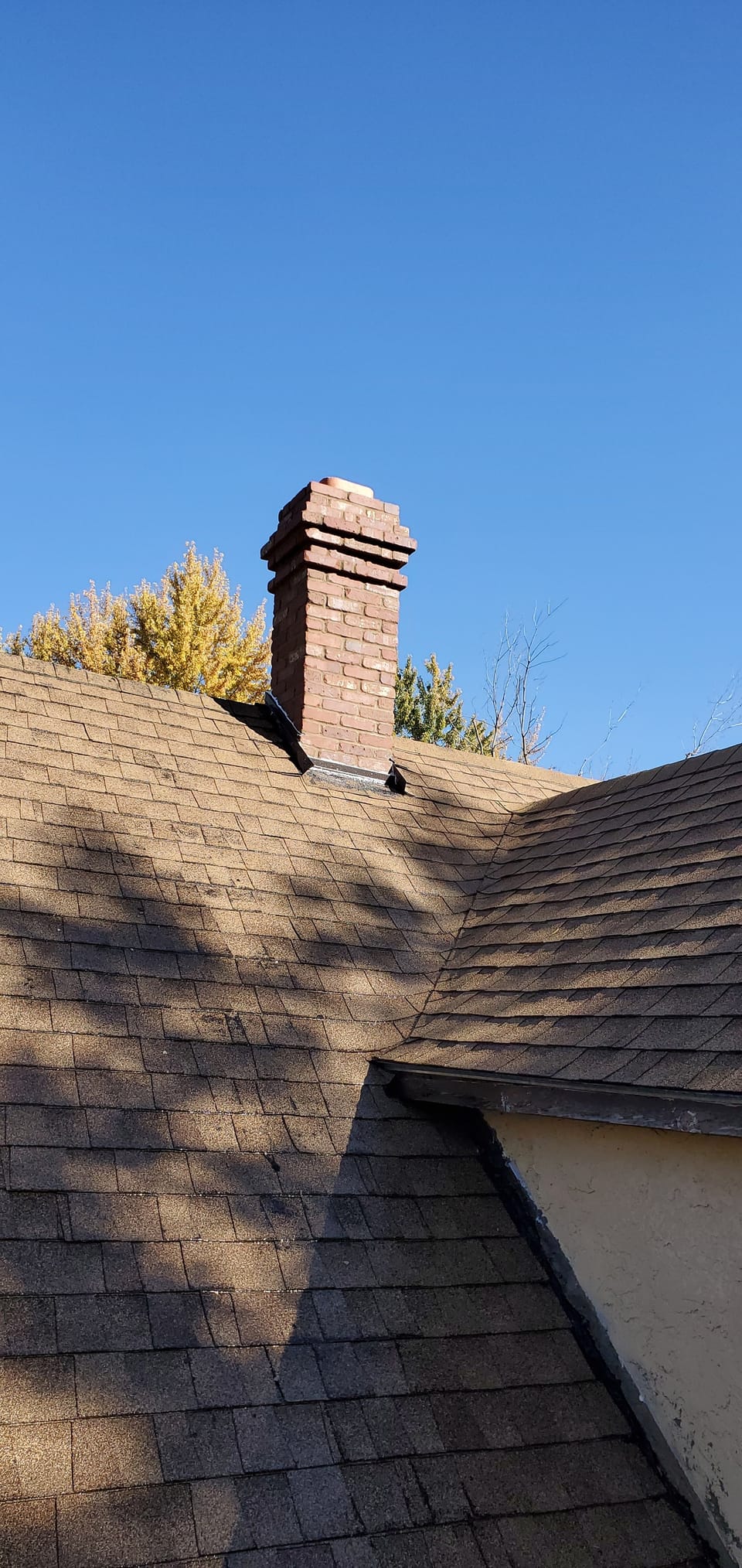
Colonial-style chimney rebuild
A crumbling brick chimney taken down and rebuilt taller with stepped corbelled brick courses to match the house's Colonial restoration.
Often needed alongside
Tuckpointing and repointing
Cutting out failed mortar and replacing it, matched as closely as the materials allow.
Tuckpointing and repointing →Inspection and consultation
A written condition report on brick, stone or chimneys, for when what you need is the assessment and not a bid.
Inspection and consultation →Masonry rebuilding
Impact damage put back the way it was: cars, forklifts, weather.
Masonry rebuilding →