
Tuckpointing and Repointing
Fackrell Masonry and Construction repoints brick, block and stone across southern Idaho, cutting failed mortar out of the joints on chimneys, houses and commercial buildings and packing in new mortar mixed to match the original color.
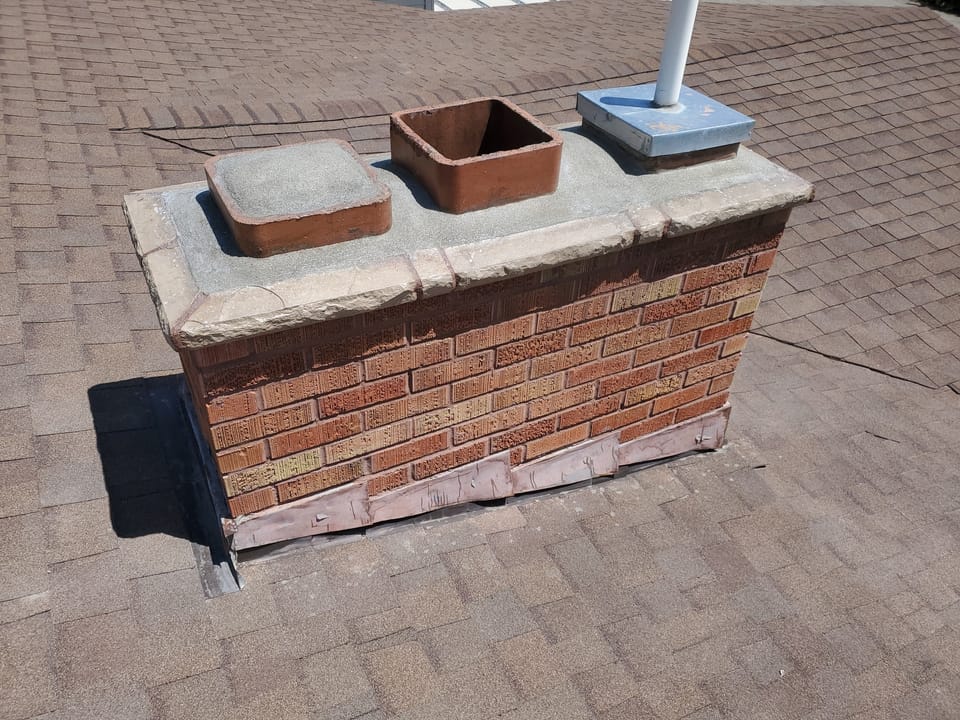
Repointing replaces the mortar, not the brick. Joints are the part of a wall that wears out first. They crack, separate and erode back, and once they've gone far enough the brick starts doing work the mortar was supposed to be doing. Dealing with that before brick starts falling out is a whole lot cheaper than dealing with it afterward.
The part nobody sees is the color, and I'll be straight with you about it. You can't get an exact match on an old wall. The original has been weathering in the Idaho sun for decades, so it isn't the color it was mixed as anymore, and some of what went into it isn't made or mined these days. My dad and I built our own sample set over years of trial and error, and it gets us to about 75%. That's close enough that the repair reads as part of the wall instead of a patch.
Repointing also turns things up. Once the joints are open, the loose brick and stone announce themselves, and that's the moment to reset them instead of waiting for one to work its way out on its own. When the wall's finished and the afternoon sun is across it, good repointing is hard to find.
What this covers
- Cracked, separated and eroded mortar cut out of the joints, then the joints washed out before anything goes back in. The National Park Service standard, Preservation Brief 2, is to cut back two to two and a half times the width of the joint. Cut it shallow, or leave the dust sitting in the joint, and the new mortar has nothing to bond to no matter how good the mix is
- Mortar matched as closely as the materials allow, worked out from a cured sample set my dad and I have built up over the years. About 75% is honest, and on a color-critical wall the chips get held against it in daylight before anything is mixed
- Mortar mixed no harder than the masonry around it. A modern high-strength mix in a soft old wall doesn't help the wall, it destroys the brick, because something has to give and it won't be the mortar
- A whole wall, post or element repointed where a spot repair would read as a patch
- The loose brick and stone that surface once the joints are open reset while I'm in there
- Earlier repairs that were done wrong put right, like cracks packed with globs of mortar instead of cut out and repointed properly
- Chimney repointing, including rebuilding the top where the joints have gone entirely
- Whole-house and whole-building repointing, worked one elevation at a time so the job stays manageable and the color stays consistent
- Commercial work, including storefronts and brick planters, washed down and cleaned up when the work is finished instead of left for somebody else
How to tell you need this
- Joints worn back from the face of the brick. A quarter of an inch of recession is the trade's standard threshold for repointing, because past that the joint stops shedding water.
- Deep holes or voids in the joints, where mortar has washed out well behind the face of the wall.
- On tooled joints, the hard outer surface worn away. Tooling compacts that skin, and the skin is what sheds water. Once it's gone, the softer mortar behind it erodes a lot faster. Raked joints don't have that surface, so on those it's simply a question of how deep the erosion runs.
- Mortar you can pick out with a fingernail. Joints erode back over time, and when the mortar comes away in crumbs the wall is overdue.
- Open cracks running through the joints. On commercial buildings I regularly find separations wide enough to take a knife blade, running the full perimeter, on walls that look perfectly sound from the parking lot.
- A brick or stone that moves when you push on it. The joints around it have failed, and repointing is how the rest of the loose ones get found and reset before one comes out of the wall.
- Repointing that still looks new, with the new mortar coming out of the joints in clean, whole chunks. Mortar is meant to give up slowly, in crumbs, over decades. When it comes out in tidy pieces you could nearly stack back up, that isn't age. That's mortar that never bonded, and it means the joints were cut too shallow, never washed out, or both.
- A previous repair that looks wrong. A stair-step crack packed with a glob of mortar instead of cut out and repointed, or mortar left across the brick faces. The packed crack has to be done over. The smeared faces, if they've been there more than a week, are permanent.
- Patchy, mismatched mortar left behind by an old spot repair. Where the color never matched, repointing the whole wall or post is what brings it back to uniform.
Questions people ask
Do you do tuckpointing in Nampa and Boise?
Yes. The service area is all of Southern Idaho, between the Oregon and Wyoming borders, reaching as far north as McCall, Stanley, New Meadows and Salmon. I work from Nampa in the Treasure Valley and Blackfoot in eastern Idaho. Houses, commercial buildings and public buildings all the same. Send the job over by clicking here.
What's the difference between tuckpointing and repointing?
In everyday use, nothing. Most people use both words for the same job, and so do plenty of masons. Ask for either one and I'll know what you mean.
The real difference is worth knowing anyway. Repointing is the repair. The failed mortar comes out of the joints and fresh mortar goes in, and that's what keeps water out of the wall. Tuckpointing was a finish, out of England in the late 1700s. Fine brickwork had hairline white joints, and if you couldn't afford that, you filled your joints to match the brick, scored a groove down the middle, and tucked a thin white ribbon of lime putty into it to look the part. It was never a repair. So nearly every job sold as tuckpointing in this country is really repointing.
The mortar between my bricks crumbles to dust when I touch it. How bad is that?
It's overdue, and it's still usually the cheap version of this job.
Mortar is meant to give itself up slowly. That's its purpose. It's the soft part of the wall, so it takes the movement and the weathering instead of the brick taking it. Powdery mortar you can rub away with a thumb is that process at the end of its run. Most people describe it as the mortar turning to sand, and that is exactly what it looks like.
What matters is how deep it goes. A quarter inch of recession from the face of the brick is the trade's threshold, because past that the joint has stopped shedding water. Take a screwdriver to it and see how far in it goes before it finds something solid. Half an inch of dust and you're well past due. If it goes in and keeps going, water is already getting behind the wall.
The good news is that you're asking before the brick has started moving. Repointing while every brick is still where the mason put it is far and away the cheapest time to do this.
Is repointing worth doing before anything has fallen off?
Yes, and that's the single best-value moment to do it. Once the joints have eroded back far enough, the brick starts carrying load the mortar was supposed to carry, and from there the wall goes downhill a good deal faster. Going in early means resetting a few loose bricks instead of rebuilding a section of wall, and mortar is cheap next to brick.
Should I repoint the whole wall or just the bad spots?
Depends how much has failed and how much you care about it looking uniform.
On a single element, a brick post or a pillar or a chimney, full repointing is usually the right call once roughly a third of the joints have gone. A patched third and an untouched two thirds never quite read as the same wall. That's a common request and a sensible one.
On a house or a larger building the work goes elevation by elevation, and whatever has failed on that elevation gets repointed. Doing a full wall keeps the color consistent across a face, and that's the part your eye actually picks up.
What does tuckpointing cost per square foot?
It gets quoted that way, and on its own the number tells you very little.
Two walls of the same square footage can be quite different jobs. How many feet of joint are in it, since small brick has a lot more joint per square foot of wall than large block does. How deep the failure runs. How high the work is, because anything off scaffold or a lift carries the cost of getting up there. Whether the joints are tooled or raked, and how much the color match matters to you. And how much loose brick turns up once the joints are open, because that gets reset while I'm in there.
There's a worse problem with the number though. A square foot rate says nothing about how deep the joint is being cut or whether it's washed out before new mortar goes in, and those two things are what decide whether the repointing lasts. A man cutting a quarter inch and skipping the wash can quote a very attractive rate.
So compare the work instead of the rate. Ask how deep they're cutting and what they do with the dust.
How long does repointing last, and how often does a house need it?
Done properly, decades. Not forever, because nothing outdoors is forever, but you shouldn't be buying it twice on the same house.
Nobody can give you a number of years that means anything, because the wall decides. An elevation taking wind-driven rain and full afternoon sun wears faster than a sheltered one on the same house, and that's why one side of a building is often ready while the other three are fine. Sprinklers hitting the same brick every morning will wear a wall out faster than the weather will.
So stop counting years and go look at the joints. Once they've worn about a quarter inch back from the face of the brick they've stopped doing their job, whether that took twenty years or eighty.
And the flip side is worth knowing. Repointing done badly can be finished inside two or three winters. If yours needs doing again soon after somebody did it, that isn't the wall's fault.
Can you repoint brick in the winter?
Some of it, with precautions. Some of it has to wait.
The problem is curing. Mortar that freezes before it cures never reaches the strength it was supposed to reach. It'll look perfectly fine. It just won't be, and nobody finds out for a few years.
So cold weather work means real precautions. Watching the overnight low instead of the afternoon high, warming the materials, and covering and protecting the work after it's laid. All of that is ordinary practice, and it's how commercial jobs run through the shoulder of the season.
Where I'll tell you to wait is a hard freeze stretch, or a shaded wall that isn't going to see enough warmth for the mortar to get going. Waiting a few weeks costs you nothing. Repointing an elevation twice costs you plenty.
If somebody offers to repoint your house in January and none of this comes up, that's your answer about him.
Will the new mortar match my old mortar?
Not exactly, and anybody who promises otherwise hasn't done much of this. The mortar you're matching has been weathering for decades, so it isn't the color it was mixed as, and some of what went into it isn't made or mined anymore.
My dad and I have spent years building a sample set to work from, and on a color-critical wall cured chips get held against the existing joints in daylight before anything is mixed. That gets us to about 75%. What you actually want isn't a perfect twin anyway. You want a repair that reads as part of the wall instead of a patch, and 75% does that.
Why is one repointing bid so much lower than another?
Because repointing is unusually easy to fake, and the fake looks identical to the real thing for the first couple of years.
The cheap version is to grind a quarter inch off the face of the joint, smear new mortar across it and call it done. It photographs beautifully. The National Park Service puts the cut at two to two and a half times the width of the joint, in Preservation Brief 2, and a quarter inch is nowhere near that.
The other half of that shortcut is skipping the wash. Cutting a joint fills it with dust, and mortar packed onto dust bonds to dust. Put those two together and you get a failure I run into constantly: repointing that still looks new, with the mortar backing out in clean whole chunks you can pick out with your fingers.
Then there's the mix. Mortar harder than the brick won't give, so the brick does, and the faces start popping off. That damage is permanent, and the repair is what created it.
None of this is expensive to do properly. It's time. The low bidder isn't cheaper because he found a better way, he's cheaper because he's doing half the work, and half the work at eighty percent of the price is a very good living. You're the one who buys the job twice.
There's a cheap check worth doing before you pick any of them. Get the state registration number off each bidder and look them up at the Idaho Division of Occupational and Professional Licenses. The trade on the registration should say masonry. A handyman code is not a masonry qualification, it's a form somebody filled in, and a bidder with no registration at all isn't allowed to take the work in the first place. It won't tell you who's good. It will thin the list out fast.
There's mortar smeared all over my brick. What does that tell me?
That whoever did it hadn't spent much time with masonry. You can read it from the sidewalk.
A thin edge of mortar at the edges of the brick is normal and nobody avoids it. Mortar across the face isn't. The skill is keeping it off there as you work, and knowing when to clean, because caught at the right moment it comes away with almost no effort.
Miss that moment and it's over fast. Mortar soaks into brick like water into a sponge. After a few days it's very hard to shift. After a week, nothing will move it. No acid wash on earth, and anything strong enough to try takes the face of the brick with it.
Which is why smeared brick almost never comes from a mason. It's usually a Chimney Sweep, a handyman, or a general contractor doing repointing as a sideline. If you can go look at a crew's last job before you hire them, go look at it.
The other thing to do takes two minutes. Ask for the state registration number and look it up at the Idaho Division of Occupational and Professional Licenses. Masonry should be the trade named on it. A handyman code isn't a masonry qualification, and nothing stops a handyman taking on your repointing. You just end up owning the result, and smeared brick is the kind of result you own permanently.
Tuckpointing and repointing projects
Real jobs, my own photos, and what the problem actually turned out to be.
Chimney repair and whole-house repoint
A brick chimney rebuilt above the roofline and loose, eroding mortar repointed around the whole house, with the new mortar color-matched to the original.
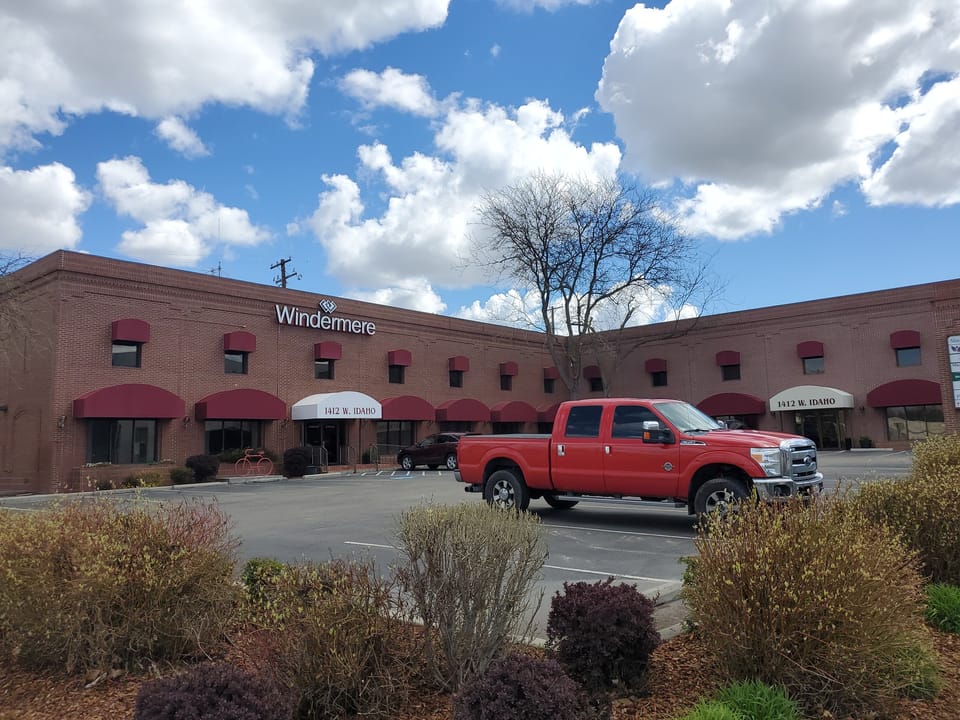
Repointing a commercial building
Mortar joints on a commercial brick building cut out and repointed, from cracked wall sections to the brick planters out front, then washed clean.
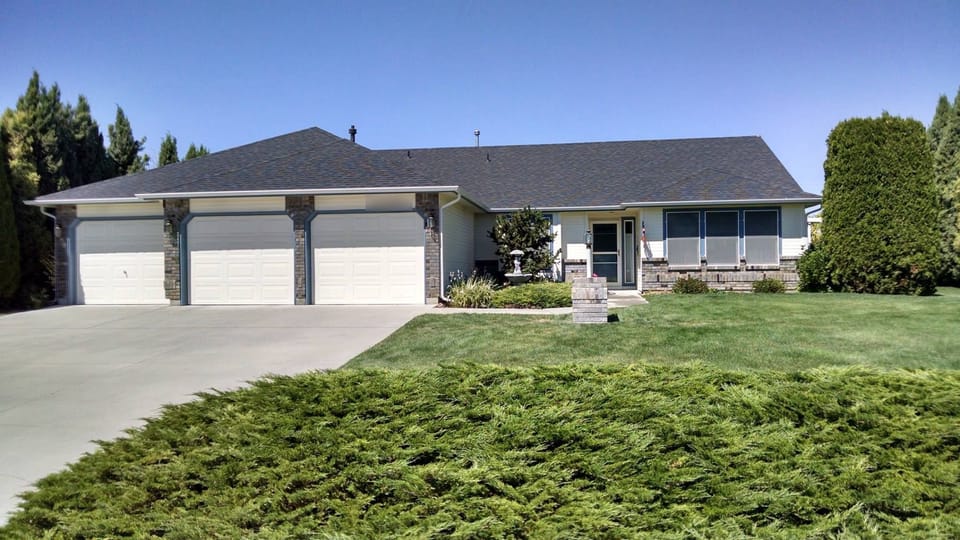
Repointing and sealing a brick light post
A brick light post with failing mortar joints fully repointed, and the brick on the house sealed to slow further weathering.
Often needed alongside
Chimney repair
Rebuilds, crowns, flue liner work and repointing.
Chimney repair →Masonry sealing and commercial cleaning
Sealing for brick, stone and pavers anywhere. Cleaning on commercial size work.
Masonry sealing and commercial cleaning →Historical restoration
Landmark buildings repaired to match what is already there.
Historical restoration →