
Masonry sealing and commercial cleaning
Fackrell Masonry and Construction seals brick, stone and pavers all over Southern Idaho, on houses and commercial buildings alike. I typically only clean commercial size buildings and projects, because getting a stain off is detective work before it's labor, and the figuring out is where most of the cost lands. A school or a storefront can carry that. One porch can't. There's still a way in on a house though, and it runs through repair work. If I'm already out there repointing or replacing brick, ask me and I'll run some cleaning test spots while I've got the wall in front of me. Tell me up front if you can, ideally at the site visit, so the cleaning materials ride out with me on the truck. I can't make a return visit just to run cleaning tests.
Sealing is the easy half of this page. Brick, stone, block or pavers, a house or a school, there's no size where sealing stops being worth doing. Cleaning is the half that needs some explaining, because the honest answer isn't the one most people expect.
Getting a stain off masonry starts with figuring out what the stain actually is. Rust, tannin bleeding out of a tree, sprinkler minerals, soot, diesel, paint. Every one of them answers to a different chemical, and the wrong pick can spread the stain around or set a worse one into the brick for good. That's why the Brick Industry Association puts identification first, and why its Technical Notes 20 has you clean a trial area to find the approach that does the least damage. So you test. Then you wait, because you can't judge a test spot the minute you rinse it off. The National Park Service, in Preservation Brief 1, won't let a crew evaluate one until the masonry has dried out completely.
On a commercial building that math works out fine. The lift or the scaffold is already up, the job runs for weeks, and the testing happens around the edges of work that's going on anyway. On a house by itself, the testing is the whole job. You'd be paying me to find out, and most of that money gets spent before either of us knows whether there's a solution at all. I'm not willing to hand somebody that bill.
So the way in on a house runs through the repair work. If I'm out there anyway replacing damaged brick or repointing joints, ask me to try some test spots on the staining while I'm on site. It's the cheap way to find out. If something shifts it, we'll talk about doing the rest. If nothing does, at least you've got a straight answer and it didn't cost you a job to get one. Just tell me early, at the site visit if you can, because the cleaning materials have to go on the truck before I leave the shop. A second trip out just to run tests isn't something I can make work.
One thing on this page matters more than the rest, and it's the order. Water staining, moss and lichen in the joints, brick that's lost its face down to the hollow cores. None of that gets better on its own, and none of it should be sealed over. Sealer on a wall that needs repair locks the problem in and buys you a nice-looking failure. Damaged brick out, washed-out joints repointed, then seal.
Sealer comes in two kinds, and the one you pick is a look, not a level of protection. A wet look sealer brings the color out. Put a wall sealed that way next to an unsealed one and you can see the difference from the street, which is the part people don't expect. The other kind is invisible. Once it's dried you can't tell anybody was ever there, and the brick or stone looks exactly the way it looked before. Both of them seal. Tell me which way you want it to look and that's the one I'll use.
What this covers
- Sealing brick, stone, block and pavers, on houses and commercial buildings alike, anywhere I work
- Wet look sealer, where you want the color brought out. It darkens and richens brick, stone and pavers the way rain does, and it holds that look until the sealer is due again
- Invisible sealer, where you don't want the look touched at all. It soaks in, dries clear, and leaves the masonry exactly the color it was. Same protection, no change you can see
- A straight answer on which of the two suits your masonry, since it comes down to what you want it to look like and not to how well it works
- Damaged brick replaced and eroded joints repointed before anything gets sealed, because sealer over an open joint is money spent hiding a problem
- Paver sealing, including joints re-sanded with a sand and cement filler as part of the work
- Straight talk about how long it lasts. Four or five years is what a masonry sealer gives you in this climate, less on a wall taking daily sprinkler spray or full afternoon sun. It's a maintenance item on a cycle, not a one-time purchase
- An honest expectation for anything you drive or walk on. A driveway, a parking apron or a busy walkway wears its sealer off years ahead of a wall, because tires and boots take it off mechanically and nothing stops that. Expect to redo those sooner
- Commercial cleaning: whole building washdowns on schools, storefronts and public buildings, worked off scaffold or lift, on a schedule with room in it for stain testing
- Commercial cleaning: acid based industrial strength cleaning for staining that consumer grade products won't shift, plus moss, lichen and vegetation cleared out of the joints where they've taken hold
- On a house: cleaning test spots run while I'm already on site for brick repair or repointing, set up ahead of time so the materials are on the truck
- Mortar smears dealt with while they're still fresh, which is the only time anybody can do anything about them. Once one has cured into the face of the brick it's there for good, and no cleaner will change that
How to tell you need this
- Water that used to bead up on the wall is soaking straight in now, which means the last sealer is done
- Pavers gone dull and faded after years in the sun
- White powdery bloom on the wall face. That's efflorescence, salt carried out of the masonry by water moving through it, and it's telling you where the water is
- Green or yellow growth in the mortar joints, usually in the corners that stay damp
- A band along the bottom of a commercial building in a different color than the rest, from sprinklers hitting the same brick for years
- Dark staining across a storefront or a school elevation that's been building up for years
- Somebody has told you the surface has to be replaced and you'd rather keep what you have
Questions people ask
Do you seal masonry in Boise, Nampa or Idaho Falls?
Yes. Fackrell Masonry and Construction works out of Nampa in the Treasure Valley and Blackfoot in eastern Idaho. The service area is all of Southern Idaho, between the Oregon and Wyoming borders, as far north as McCall, Stanley, New Meadows and Salmon. Send some photos of the masonry over by clicking here and I'll take a look.
Will you clean the brick on my house?
Sealing, absolutely, any house and any size. Cleaning is the one I take on as commercial work, and the reason is worth hearing, because it has nothing to do with the size of your job.
Stain removal is detective work before it's labor. Every stain answers to a different chemical, the wrong one can set a worse stain permanently, and a test spot has to dry before anybody can tell you whether it worked. On a school or a storefront I'm out there for weeks and the testing rides along with everything else. On a house by itself, the testing is the whole job, and you'd be paying me to find out rather than paying for a clean wall.
Here's the exception, and it's worth knowing about. If I'm already at your house for repointing or brick repair, ask me to run some test spots while I'm there. Ask early, at the site visit if you can, so the cleaning materials come out with me on the day. If something shifts the stain we'll talk about the rest. If nothing does, at least you know.
There's white powdery stuff on my brick. What is it, and how do I get rid of it?
Efflorescence. Salt carried out through the masonry by water and left on the face when the water evaporates.
First, set your expectations. Efflorescence does not always come off. Fresh bloom often does. Older deposits have had time to harden on the surface, and some of those never fully clear no matter what gets thrown at them.
Start with a stiff dry brush, then a small amount of water. Small is the whole point. Water is what carried the salt out in the first place, so washing a wall down to clean it is feeding the thing you're trying to stop. If a little water and a brush don't shift it, a cleaner made for efflorescence is next. Anything past that is worth asking about before you start, because the aggressive products will lighten the brick around the stain.
And whatever comes off, it's coming back if you stop there.
What matters is that it's a report. Salt on the outside means water is moving through the wall, and it left from that particular spot for a reason. Follow it upward and you'll usually find the source. A failed crown or coping, a leaking rain gutter, a downspout discharging at the wall base, sprinklers hitting the same brick every morning, or joints eroded enough to drink.
So find the water, close it off, then clean. And don't seal over active efflorescence. That puts a lid on water that's still arriving, and the salt keeps crystallizing under the sealer instead of on top of the brick, which does real damage and costs more to undo than the cleaning would have.
New masonry is the exception. A bloom on new brick or new pavers is the cement curing out. It's normal and most of it weathers off in the first year.
Green and black growth is spreading across my brick. Is it hurting the wall?
Slowly, yes, and more than most people think.
Moss, algae and lichen need moisture to live, so a wall growing them is a wall staying damp. That's the first thing it's telling you. Then the growth holds that moisture against the masonry instead of letting it dry, so the wall stays wet longer after every rain, and a wall that stays wet through a freeze is a wall losing mortar. Lichen is the worst of the three, because it grips into the joint and works into the surface.
Where it shows up is a clue in itself. North faces, shaded corners, anywhere a downspout or a sprinkler keeps things damp, and low down where splash comes back off the ground. Deal with the damp and you deal with most of the growth.
Removal is straightforward on commercial size work and it goes along with the washdown. On a house the answer is the same as the rest of this page. If I'm already out there for repointing or brick repair, ask me and I'll try it while I'm on site.
One warning. Don't take a pressure washer to it on old brick, and don't reach for household bleach on masonry either. Both cause their own problems and neither one stops it coming back.
Rust stains are running down my brick. Will those come out?
Often, yes. Rust is one of the more treatable stains, because it answers to a specific chemical rather than to scrubbing.
The catch is finding where the iron is coming from, because until you do the stain comes back. The usual suspects are well water through a sprinkler, which is common around here and shows up as a band at the same height across a whole elevation. A steel lintel over a window or door corroding behind the brick, which isn't a cleaning problem at all, it's a repair. Railings, anchors or ties. Or iron minerals in the stone itself, and that one doesn't clean off, because it was never on the surface.
So the sequence is identify, then test a small area, then wait for it to dry before deciding whether it worked. Rust removers made for masonry are aggressive, and some of them will lighten the brick around the stain, which is how one problem becomes two.
That testing is exactly why cleaning is commercial work here. On a building the testing rides along with a job that's happening anyway. On one house wall, the testing is the whole job.
Can you get old mortar smears off my brick?
Old ones, honestly, no. This is the one job I'd rather turn down than take your money for.
The window is short. Caught the same day, a smear comes off easily. After a few days it's very difficult. After a week it's hardened into the pores of the brick and no acid wash on earth will lift it, and anything strong enough to try takes the face of the brick with it.
So if you're looking at fresh work with mortar across the faces, don't wait around to see whether it weathers off. It won't. Get somebody on it this week. And if it's been years, the honest answer is that the wall looks like that now.
Can I just pressure wash it myself?
You can, and on old or soft masonry I'd rather you didn't.
A pressure washer doesn't dissolve anything. It removes material by force, and it can't tell the dirt from the wall. On soft old brick it takes the fired face off, and that face is the weatherproof part. Once it's gone, the brick underneath is porous and it goes downhill quickly. On mortar joints it blows out anything already soft, which is why a patio that gets pressure washed every spring loses its joint sand every spring.
If you're going to do it anyway, on sound modern brick, keep the pressure low, use a wide fan tip, stay well back and never hold it in one place. Test somewhere nobody looks first.
Where it genuinely doesn't work is staining, which is what most people bought it for. Rust, tannin, soot and sprinkler minerals are down in the pores instead of on the surface, and pressure won't reach them. All that happens is you drive water deep into the wall and take some of the masonry off with it. That's how people arrive at the conclusion that the whole wall has to be replaced, when it usually doesn't.
Why won't consumer cleaners shift my stain?
People usually ask me this after they've already lost a weekend to it. The products off the shelf at the hardware store are formulated to be safe on everything, which is another way of saying they're strong enough for very little. On heavy staining they just don't touch it.
By the time somebody calls, the question has usually grown from whether the surface can be cleaned into whether the whole thing has to come out and be replaced. It rarely does. That's worth knowing even where cleaning isn't the job I'm there to do.
Will cleaning damage my brick or stone?
It can, and that's exactly why anything with a bite to it gets tried on a small area first.
The strong end of the range is an acid based industrial cleaner, and that stuff is genuinely aggressive. It etches the surface of the masonry to lift staining out of the pores. On heavily stained masonry it's often the only thing that works, and with sealer over it afterward the finish can look better than the day the work was first built. On a gentler stain, a gentler method does the job and there's no reason to reach past it.
How long does sealer last?
Four or five years at the most, and less than that on a wall taking daily sprinkler spray or full afternoon sun. Anybody quoting you a decade hasn't watched one through an Idaho winter.
Anything you drive or walk on is shorter still. A driveway, a parking apron or a busy walkway loses its sealer to tires and boots, which take it off mechanically no matter how good the product was. Plan on redoing those well before you redo a wall.
That's not a reason to skip it. Sealer keeps water and stains out of the pores of the brick, and water in the brick is what eventually costs you mortar joints. Think of it the way you think about paint on a building: a maintenance item on a cycle instead of a one-time fix. You'll see when it's due, because water stops beading and starts soaking in.
Does sealing brick trap moisture in the wall?
A good product doesn't. A wrong one absolutely does. It's a fair concern and it's worth understanding, because it's the same mistake that ruins painted brick.
Masonry has to breathe. Water gets into a wall from somewhere no matter what anybody does, and it has to be able to leave as vapor. A breathable sealer is built for exactly that. It stops liquid water soaking into the pores from outside while still letting vapor out. A film sitting on the surface blocking both directions is what traps moisture, and trapped moisture behind a brick face pushes that face right off in a freeze.
Which is why paint is the usual villain here rather than sealer. Paint forms a film. A masonry sealer soaks in.
Two rules keep it safe. Use a breathable product made for masonry, and don't seal over a problem. Sealing a wall with open joints, spalled brick or active efflorescence traps water that's still arriving, and now you've paid to make it worse. Repairs first, then seal. That order is the whole answer.
Does sealing change how the masonry looks?
That's your call, because sealer comes in two kinds and they protect the masonry equally well.
A wet look sealer brings the color out. Brick, stone and pavers go darker and richer, the way they look in the rain, instead of sitting there flat and gray. Most people who ask for sealer are picturing this one.
An invisible sealer does nothing you can see. It soaks in, dries clear, and the masonry ends up exactly the color it started. If you like the way your house looks now and you only want the water kept out, that's the one.
So the question isn't really whether sealing changes the look. It's which of the two you want.
Do I need mortar repairs before you seal?
If joints have eroded or brick is damaged, yes. Sealer doesn't fix an open joint or a spalled brick. It covers it up, and then you've paid to make the problem harder to see. Damaged brick out, washed-out joints repointed, then seal. That order is what makes the sealing worth paying for at all.
Leaving the repair out is quicker and it brings the price down a long way, which is exactly why it happens. The wall looks wonderful for a season. Behind it, water is still getting into those open joints, and now there's a sealer over the top helping to keep it in there.
Should I paint my brick?
Most masons will tell you not to, and I'm one of them. Part of that is simple preference. We like brick in its natural state, and most masons think painted brick looks terrible.
The bigger problem is that it's almost never done correctly. Brick has to breathe. There is paint made for masonry, but the wrong product traps the moisture that used to pass out through the wall, and trapped moisture pushes the face right off the brick. On a whole elevation that's a very expensive discovery. It's really a painting question. It's just one most painters have never had to think about.
And it's a one-way decision. Getting paint back off brick without destroying the brick is close to impossible.
Do you clean and seal schools and commercial buildings?
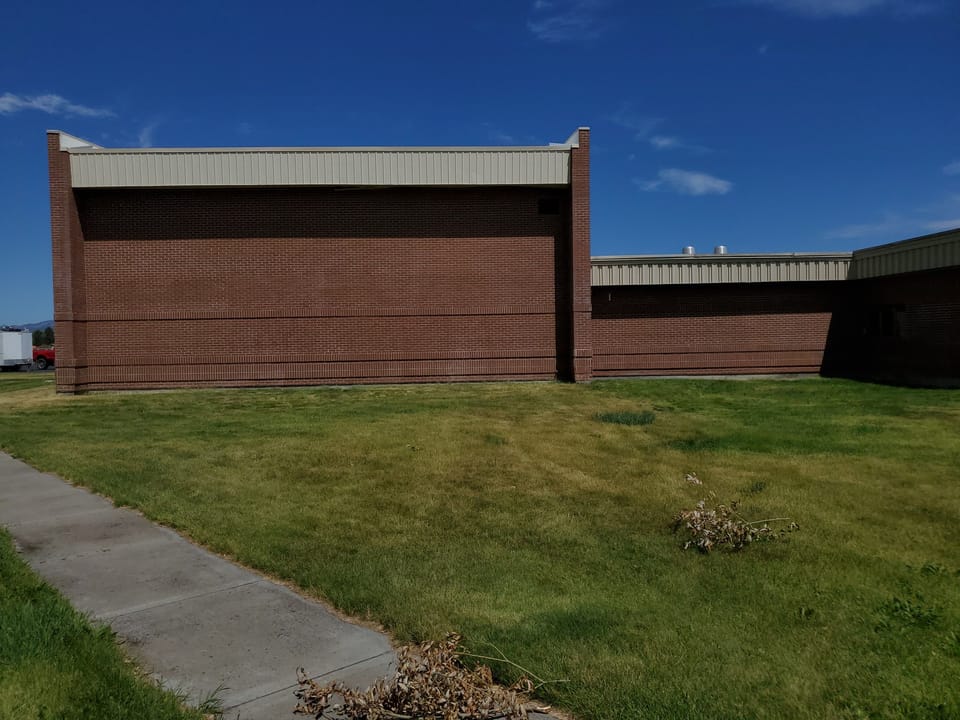
Yes, regularly, and they're some of the most satisfying jobs on the calendar. Swan Valley School was brick repair, mortar repointing, cleaning and sealing across the whole exterior, worked off scaffold and ladders for the tall gym wall. The building was in decent condition and the principal wanted the small problems handled before they turned into major ones, which is exactly the right instinct and a lot rarer than it should be.
A building that size is also what makes proper stain testing possible. The job runs long enough to test something, let it dry, look at it again, and then commit to a method across the whole elevation.
Masonry sealing and commercial cleaning projects
Real jobs, my own photos, and what the problem actually turned out to be.
Swan Valley School cleaning and sealing
Cleaning and sealing the brick exterior of Swan Valley School, with damaged brick replaced and eroded mortar joints repointed first.
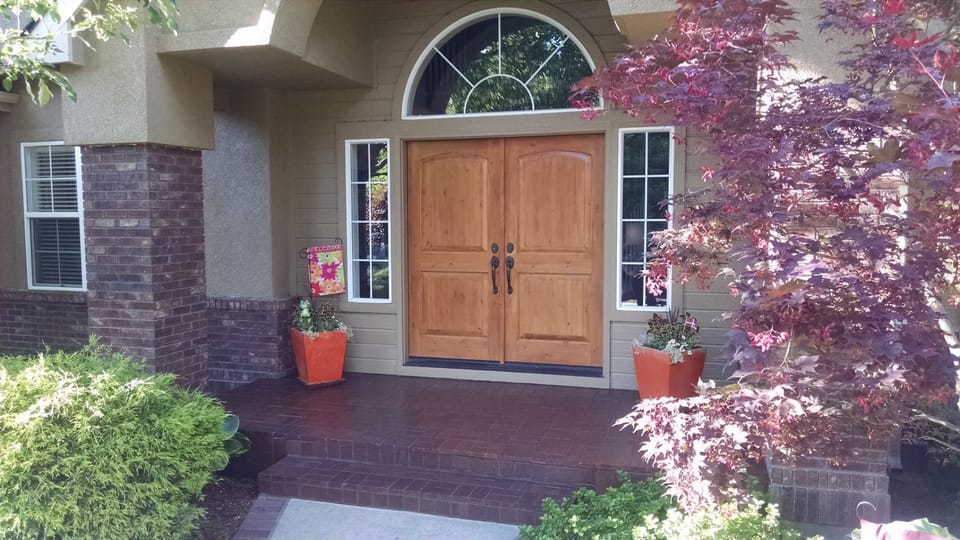
Stain removal and sealing
A stained brick front porch and steps cleaned with an industrial acid cleaner, a cracked mortar joint repaired, and the whole surface sealed.
Often needed alongside
Tuckpointing and repointing
Cutting out failed mortar and replacing it, matched as closely as the materials allow.
Tuckpointing and repointing →Stone patios and pavers
Patios, walkways and driveways laid on a base that holds.
Stone patios and pavers →New brick, stone and block
New brick and stone veneer, block walls, fences and outdoor living.
New brick, stone and block →