
Masonry inspection
Fackrell Masonry and Construction inspects brick, stone and chimneys and puts what we find in writing. This is a paid inspection, for the times you need to know the condition of a building instead of a price on fixing it. Maybe you're buying a house and the home inspector punted the masonry to a specialist. Maybe you own a building and need to know what's wrong before you ask anybody for bids. Maybe you're on a board and have to budget for it. Or you're holding two estimates that don't agree.
Every estimate comes with a look at the job, free, the way it does with any contractor. This page is about the other thing. A paid inspection is for when the report itself is what you need, and it's a service I'll travel for. You get the condition of the masonry in writing, with photographs, and it belongs to you. Hand it to a lender, an insurer, a board, a buyer, a seller, or to three contractors on the same afternoon.
The most common reason people call is a real estate transaction. A home inspector writes "recommend evaluation by a masonry specialist" and moves on, and now somebody has a short window, a lender waiting and a number to negotiate. The other regular one is an owner or property manager sitting on a building with a lot of brick on it, who can't sensibly ask anybody for bids until somebody has said what's actually wrong.
What you're hiring is a mason's eye. Three generations of it, and over 50 years of the family looking at brick, stone, mortar and chimneys. You get what I find, what I believe is behind it, and what it takes to put right. That's a different service from a structural engineer's stamp and it costs a small fraction of one, and for most masonry questions it's also the answer you actually need.
If it does turn out you need an engineer, you're still ahead. You'll know early, before paying anybody to repair the wrong thing, and you'll know why. Engineers bill by the hour, so walking into their office with the conditions already documented and photographed means they aren't starting from a blank page. Most of what I get called out to look at, I already know how to fix. Loose brick, mortar washing out of the joints, a crown that was never adequate, brick coming apart over a window. After this long I also recognise the rarer case that genuinely needs a stamp, and telling you which one you've got is part of what the inspection buys.
What this covers
- A written report on the condition of the masonry, with photographs, in a form you can hand to anybody
- Every problem named along with its likely cause, because the cause is what decides the repair. A crack is a symptom, and repairing a symptom is how people end up doing the same work twice
- What's urgent, what can wait a season, and what's purely cosmetic, separated out so you can build a budget against it
- Repair options and cost ranges you can budget against or take out to bid
- A look at the parts nobody can see from the ground, by lift or drone where the building calls for it
- Brick, block, stone, mortar, crowns, flues and flashing, on the whole structure instead of only the elevation you called about
- A straight answer on whether a Professional Engineer would add anything, and documentation that shortens their work if one is needed
- A written masonry scope you can hand to every bidder, which is the only way to get bids that are genuinely comparable
How to tell you need this
- You're buying a house and the home inspector wrote "recommend evaluation by a masonry specialist" and left it at that
- You own or manage a building with a lot of masonry and need to know its condition before you ask anybody for a bid
- You're holding two or three estimates that don't agree, with no way to tell which one describes your actual problem
- You sit on a board or manage property and need to know what masonry work is coming in the next one, three and five years so it can be budgeted
- An insurance claim was denied or paid short and you need an independent opinion on cause and scope, in writing
- You're designing or bidding a project and want the masonry scope written by a mason
- A vehicle, a fire or settlement did something to your building and somebody needs it documented properly
Questions people ask
How is this different from the free estimate?
An estimate is free and it comes with a look at the work you asked about. Every contractor does that, and you don't need this page for it.
A paid inspection is a different product. It covers the whole structure instead of the one thing you called about. It arrives in writing, with photographs. And it's yours, to use however you like, including to collect bids from other people. You're buying the assessment, not a proposal.
I'm buying a house and the inspector says to get a masonry specialist. Can you help?
That's one of the most common reasons people call. A general home inspector isn't a mason, so masonry usually comes back as a line telling you to go ask one. Meanwhile you've got a short window, a lender waiting and a price to negotiate.
You get a written assessment of the brick, stone and chimneys, what it's likely to take to put right, and cost ranges. Whether you use it to walk away, to negotiate, or just to stop worrying about it, it's a small line item next to what's being decided.
The home inspector already looked at it. Why pay for a second opinion?
Because in most cases the home inspector is the one who told you to. That line, recommend evaluation by a masonry specialist, is the single most common reason people call about this.
A general home inspector is a generalist, and a good one knows exactly where his expertise stops. Masonry is one of those places. He can see that something looks wrong, and he isn't in a position to tell you what caused it, how far it runs, whether it's structural, or what putting it right involves. So he writes the line and moves on, correctly.
Those four things are the whole product here. What it is, what caused it, how bad it is, and what it takes to fix. With photographs, in writing, in a form you can hand to a lender, a seller, or three contractors on the same afternoon.
And if the inspector flagged nothing but you're still uneasy about the chimney, that's a reasonable call too. A chimney is the one part of a house nobody has ever gone and looked at.
What does a masonry inspection cost?
Less than most people expect, and a small fraction of an engineer, which is usually the comparison that matters.
What moves it is the building and the drive. How far away it is, since I travel for these. How big and how complicated, because a single chimney and a three-story commercial envelope are not the same afternoon. And whether getting eyes on it takes a lift or a drone, which is often the difference between a real assessment and a guess from the ground.
You'll have the number before anything is committed. Send the address and what's worrying you and you'll get a straight answer on whether an inspection even makes sense in your situation, because sometimes it doesn't.
Worth some perspective on a house purchase. Next to what's being decided in that transaction, and next to what a chimney rebuild costs when you find out afterward, it's a line item.
Do you travel for inspections?
Yes. Masonry work I take on regionally, but an inspection is a different proposition. It's a day, a report and a drive. Send the address and what you're worried about over by clicking here, and you'll get a straight answer on whether it makes sense before anybody commits to anything.
Is it safe to use my fireplace?
Nobody should answer that from a distance, myself included, and there are two separate questions inside it.
One is whether the flue is clear. Creosote buildup and blockages are what cause chimney fires, and that gets checked by the trade that cleans flues. It isn't my work and I'd send you to them for it.
The other is whether the chimney and firebox are sound. Is the masonry intact, is the liner in reasonable condition where it can be seen, is the firebox cracked, is the stack stable, is there anywhere hot gas can get to that it shouldn't. That's a masonry question and it's what an inspection here covers.
Both matter. A clean flue in a cracked chimney is not a safe fireplace.
Until you know, don't light it. That's a cheap decision. And if the chimney is dropping brick, leaning, or you can see cracks through the firebox, that isn't a wait-and-see.
Another contractor told me my chimney has to be torn down. Should I get a second opinion?
It's worth one, and this comes up regularly. A contractor starts a crack repair, gets into it, finds the problem is much larger than the crack, and tells the owner the whole chimney has to come down.
Sometimes that's right. Sometimes it isn't the chimney at all. I've been out to chimneys that were separating from the house, which is a foundation question wearing a masonry costume, and no amount of chimney work would have solved it. A second opinion sometimes agrees with the first. Either way you'll know which problem you're actually paying to solve.
Who can write up masonry damage for an insurance claim?
Somebody who works in the trade, and that's rather the point. An adjuster is assessing a lot of different things across a lot of different buildings, and masonry is one line on a long list.
What a written report from a mason gives you is cause and scope. What failed, what's behind it, how far it runs, and what putting it right actually involves, itemized instead of lumped. That's the form a carrier can act on, and it's the form that holds up when a claim gets paid short and you want to say why.
Three situations bring people here. A claim already denied or underpaid, where you need an independent read on cause. A dispute over whether damage is impact, weather or ordinary wear, because those three get treated very differently. And documenting a building before work starts, which is the one people skip and then regret.
Two things I won't do. I won't tell you what your policy covers, because that's your carrier's language and not mine. And I won't write a conclusion I don't hold. A report that says what you wanted it to say is worth nothing to you the moment somebody pushes on it.
Can I use your report to get bids from other contractors?
Yes, and plenty of people buy one for exactly that. You paid for the assessment, so it's yours.
It's also the only way to get prices you can actually compare. Hand every contractor the same written list of what needs doing and you're comparing three prices for one job. Let each of them decide for himself what the job is, and you're comparing three prices for three different jobs. The cheapest is usually cheapest because it covers the least, and that's very hard to see when all you've got in front of you is a number.
Should I hire a mason or a structural engineer?
Start with the mason. A masonry inspection costs a fraction of what an engineer costs, and for most of what goes wrong with brick, stone and chimneys it's the right expertise anyway. Mortar failing, brick spalling, stone coming loose, a crown that was never adequate, a chimney taking water. Those are masonry questions and you'll get masonry answers.
If it does turn out to be structural, you've lost nothing. You found out early, you know why, and an engineer billing by the hour isn't starting from a blank page.
What can you tell me, and what needs somebody else?
I inspect as a professional mason. That covers the condition of the brick, block, stone, mortar, crowns, flues and flashing, the likely causes of what I'm seeing, and what a repair would involve. It's the great majority of what goes wrong on a masonry building.
Anything structural is an engineer's determination by law. Finding that out early and cheaply, instead of after somebody has repaired the wrong thing, is part of what the inspection is for.
Inspection and consultation projects
Real jobs, my own photos, and what the problem actually turned out to be.
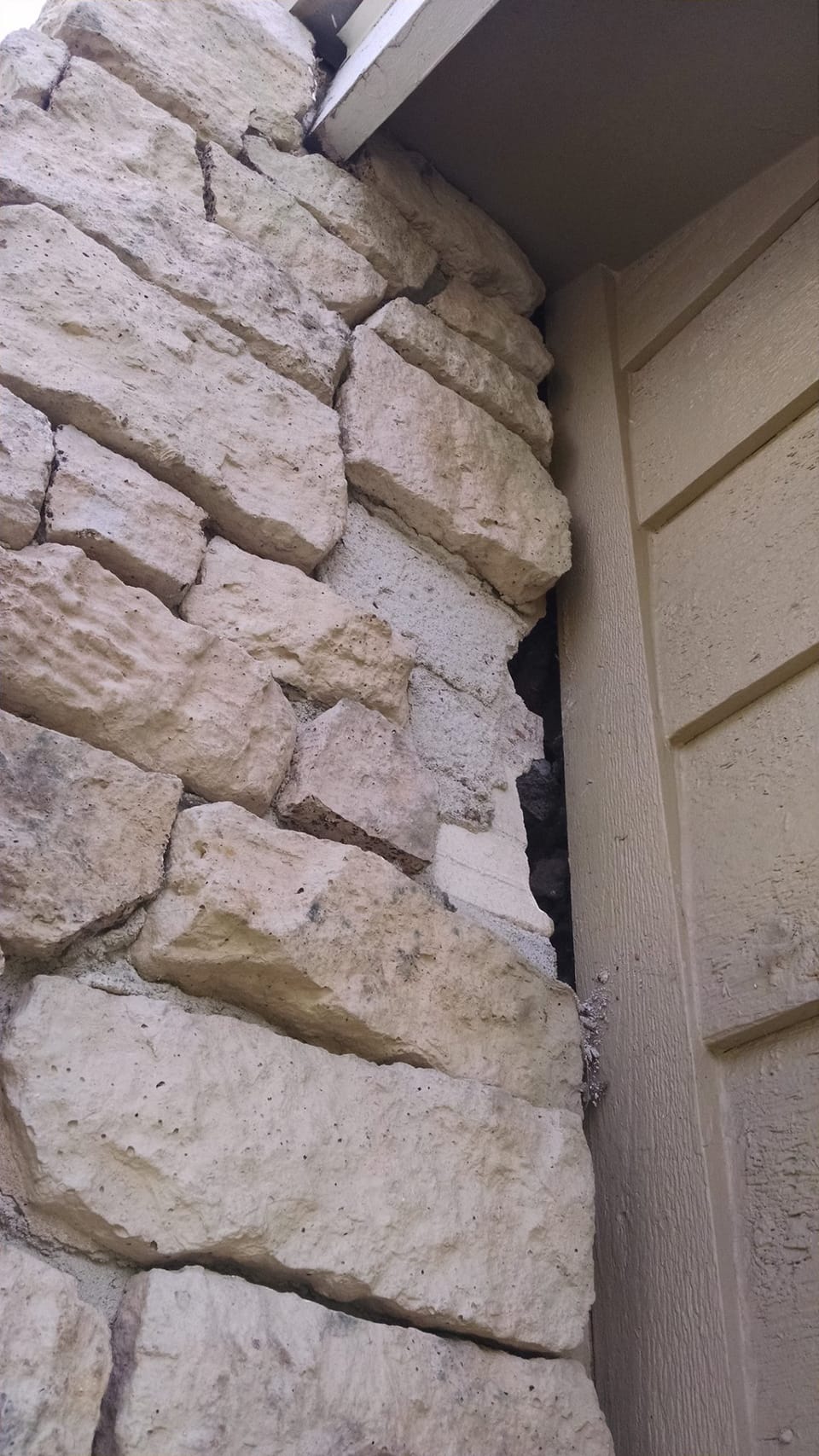
When the honest answer was "call an engineer"
A cracked chimney inspected and referred to a Professional Engineer once we found it separating from the house instead of simply cracked.
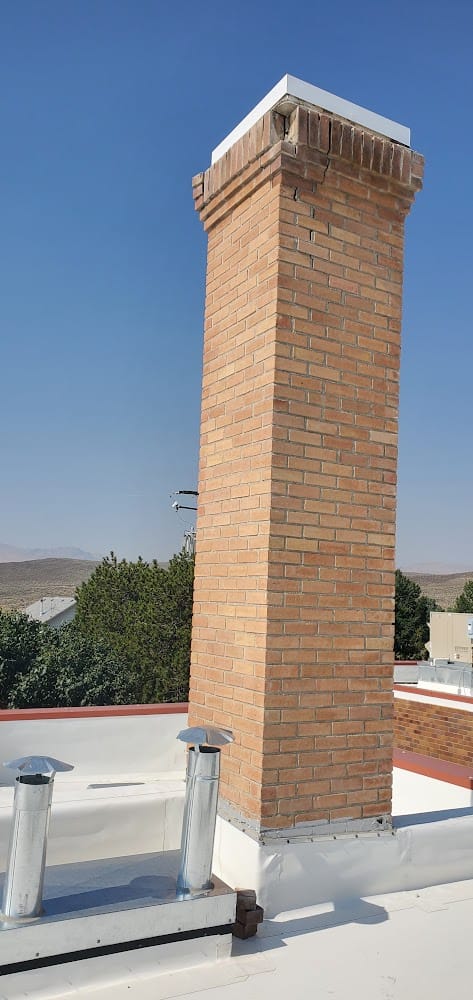
Owyhee County Courthouse
A tall brick chimney on the Owyhee County Courthouse in Murphy, Idaho: eroded mortar and loose brick found up under the crown, documented off the roof and put right.
Often needed alongside
Chimney repair
Rebuilds, crowns, flue liner work and repointing.
Chimney repair →Tuckpointing and repointing
Cutting out failed mortar and replacing it, matched as closely as the materials allow.
Tuckpointing and repointing →Masonry rebuilding
Impact damage put back the way it was: cars, forklifts, weather.
Masonry rebuilding →